Terence McKenna's Novelty Theory: Bridging I-Ching, DNA, and Mathematical Attractors in Cosmic Evolution
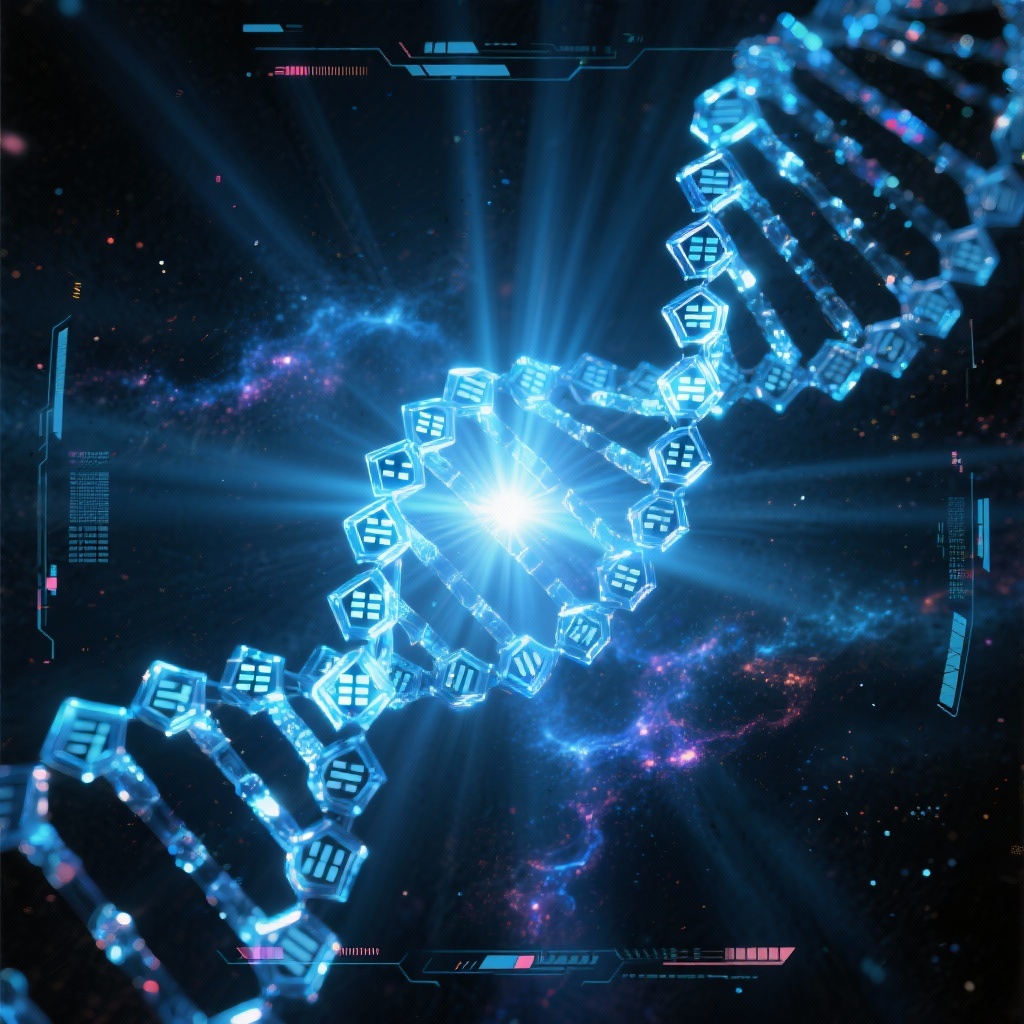
Terence McKenna's Novelty Theory: Bridging I-Ching, DNA, and Mathematical Attractors in Cosmic Evolution
Summary:
Terence McKenna presents an interdisciplinary theory connecting ancient Chinese wisdom with modern science to propose a teleological model of cosmic evolution. He argues that the I-Ching's 64 hexagrams correspond precisely to DNA's 64 codons, suggesting ancient meditators discovered fundamental temporal structures through introspection. McKenna introduces mathematical "attractor theory" to argue evolution is pulled toward increasing complexity rather than pushed by causal chains. This "transcendental object at the end of time" represents maximum novelty, with humanity currently serving as the cutting edge of cosmic complexification. The theory provides ethical purpose - human destiny is to advance novelty through cultural and technological innovation - while bridging Eastern temporal understanding with Western scientific rigor.
Key Points:
- Time operates through resonance patterns connecting distant moments rather than linear causality
- The I-Ching's 64 hexagrams structurally mirror DNA's 64 codons, suggesting deep connection between temporal and biological codes
- Evolution may be "pulled" by future attractors rather than "pushed" by past causes
- Humanity represents the current peak of cosmic complexification, combining biology with culture/technology
- Eastern philosophy focused on time while Western science focused on matter/energy
- Novelty theory provides ethical purpose: to preserve and advance complexity
- This framework reconciles science with purpose without requiring supernatural explanations
Notable Quotes:
- "The dunes [are] a lower-dimensional slice of time, of the wind ebbing and flowing that made it" (McKenna, 03:04-03:10)
- "Whatever it is that made blind matter into whales, squirrels and human beings, it left its calling card inside each human being... That's the DNA" (McKenna, 03:56-04:10)
- "The coincidence between the structure of the I-Ching and the structure of the DNA is staggering" (McKenna, 06:03-06:10)
- "The purpose of being a human is to complexify reality even more, to hand on a more diverse, more complicated, more multi-phased universe to our children" (McKenna, 15:15-15:23)
- "We are the most novel thing on this planet. We are everything biology is plus technology, language, politics, philosophy, art" (McKenna, 13:45-13:54)
Data Points:
- I-Ching system: 64 hexagrams representing "subtypes of time"
- DNA: 64 codons in genetic code
- Evolutionary timeline: 5 billion years of Earth's life
- Western scientific achievement: ability to trigger nuclear fusion/fission
- Eastern temporal study: 5,000 years of investigation
- Mathematical concept: Strange attractors as basins of attraction
Controversial Claims:
- The I-Ching represents actual molecular dynamics rather than mystical divination
- DNA's structure was discovered through ancient meditation rather than scientific inquiry
- Evolution has teleological purpose directed toward novelty maximization
- Western science's focus on matter/energy is incomplete compared to Eastern time-understanding
- Humanity occupies a privileged position as the current "cutting edge" of cosmic evolution
- Mathematical attractors prove the universe has inherent purpose and direction
Technical Terms:
- I-Ching (Yi Jing) Hexagrams DNA codons Strange attractors Teleology Novelty theory Transcendental object Complexification Co-tangent Molecular dynamics Omega point Basins of attraction Evolutionary theory Epistemology
Content Analysis:
Terence McKenna presents a complex interdisciplinary argument connecting ancient Chinese divination systems with modern scientific concepts. The core theme is his "Novelty Theory" - the idea that time has structure and directionality toward increasing complexity. Key elements include: the I-Ching as a sophisticated model of temporal dynamics (64 hexagrams corresponding to DNA codons), the concept of "attractors" from chaos theory as evidence of teleology in evolution, and the philosophical implications of viewing humanity as the current peak of cosmic complexification. McKenna argues against reductionist science while maintaining a mathematical framework, positioning his theory as a bridge between Eastern temporal understanding and Western material science.
Extraction Strategy:
The strategy prioritizes McKenna's core philosophical framework while preserving his distinctive metaphorical reasoning (sand dunes/wind analogy, ball bearing/bowl example). Focus is maintained on: 1) The I-Ching/DNA correspondence as foundational evidence 2) The attractor theory as mathematical support for teleology 3) The ethical implications of novelty theory 4) McKenna's positioning of his work as scientific rather than mystical. The extraction maintains McKenna's progressive argument structure from ancient systems to modern mathematics to philosophical conclusions.
Knowledge Mapping:
This content connects to multiple domains: Chinese philosophy (I-Ching's 64 hexagrams), molecular biology (DNA codon structure), chaos theory (strange attractors), evolutionary biology (teleology vs. Darwinism), and philosophy of science (Eastern vs. Western epistemologies). McKenna positions his theory within historical context - contrasting 5,000 years of Eastern time-study with Western energy-matter focus. The work relates to Pierre Teilhard de Chardin's Omega Point concept and challenges conventional evolutionary theory by introducing mathematical teleology through attractor dynamics.
Published November 14, 2025